


Think about the last time you called a company and heard: ‘Thank you for calling. Press 1 for Sales, press 2 for Support…’ That's a virtual receptionist at work, and there's a good reason most businesses, large or small, use one.
Whether you're running a lean team and need to project a more proficient presence or managing a growing business with more incoming calls than your staff can handle, a virtual receptionist is one of the most practical options a Unified Communications as a Service (UCaaS)/hosted VoIP phone system can offer. Here's everything you need to know about how it works and what it can do for your organization.
What Is a Virtual Receptionist?
A virtual receptionist is a business call feature that automatically answers calls to your business's main line with a pre-recorded message and presents callers with a handful of call routing options. These options automatically send callers to other destinations in your business phone system, like your Sales Department’s ACD queue or a dial-by-name directory of everyone in your organization. No hold music, no missed calls, no staff member stuck answering the same basic questions all day.
You configure this feature in your VoIP provider’s admin portal. There, you record or upload your customized message. You also select a destination for each number and symbol on a telephone keypad. For instance, when a caller presses ‘1’ on his touch tone (DTMF) phone keypad, you can have him automatically sent to the sales queue. When a caller presses ‘2,’ you can have him sent to the support queue. When a caller presses ‘3,’ you can have him sent to the dial-by-name directory. And so on. You customize it to meet your business needs.
An example script for this phone system feature is: ‘Hello! Thank you for calling Acme Car Parts. If you’d like to learn more about the products that we sell, please press '1.' If you have any questions about a product that you’ve purchased, please press '2.' For our address and hours of operation, please press '3.'’ ...
If your employees have phone extensions, it can handle those, too. Callers can dial the extension of the employee they’d like to talk with once the recorded message starts playing. Or, in phone greeting parlance: ‘If you know the extension of the party you wish to reach, you may dial it at any time.’
Typically, these virtual features are set to automatically answer each and every inbound call to your business’s main phone number. In that sense, they are literally virtual receptionists—automated recordings that take a receptionist’s place by answering calls and connecting callers with the person that can resolve their questions.
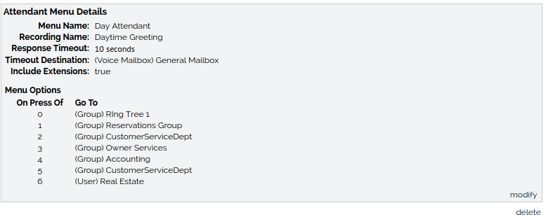
If this sounds familiar to you, you may already know about these digital staff members by their other aliases: auto attendants, auto attendant menus, and attendant menus. Whichever term you use, you're talking about an automated phone menu that answers calls and routes them based on caller input.
Virtual Receptionist vs. The Alternatives
The term gets applied to a few different things, and the distinctions matter when you're shopping for a solution. Here's how it compares to the call features and services it's most commonly compared with:
Virtual Receptionist vs. In-House Receptionist
A traditional receptionist is a full-time employee: someone who answers phones, greets visitors, manages schedules, and handles the front desk in person. That's valuable, but it comes at a cost. Salary, benefits, training, and coverage gaps when they're sick or on vacation add up quickly. A digital replacement handles the call routing and greeting functions automatically, around the clock, at a fraction of the cost. The trade-off: it can't greet a walk-in customer or handle tasks that require a physical presence.
Virtual Receptionist vs. Live Answering Service
A live answering service connects your callers to a real human, just one who works remotely for a third-party agency rather than in your office. They can take messages, answer basic questions using a script you provide, schedule appointments, and transfer calls. It's a more personal experience than an automated system and better suited for businesses where callers expect a human on the other end. The downside is cost: live answering services typically run higher than automated solutions, and quality can vary by agency.
Virtual Receptionist vs. Voicemail
Voicemail is a fallback option for when you or a staff member can’t answer the phone. When a caller reaches voicemail, the interaction is essentially over; they leave a message and wait for a callback. A virtual automated greeting keeps the call active, presenting options and routing the caller toward a person or department who can efficiently address their needs.
More Than Call Routing: The Real Benefits of a Virtual Receptionist
Doing more than just answering phone calls, this virtual call feature can meaningfully change how callers experience your company while also reducing the amount of time your team spends managing incoming calls. Here's a closer look at what it looks like in practice:
Every Caller Gets a Response—Every Time
A human receptionist can handle one call at a time. When a second call comes in, that person waits on hold (or worse, gets a busy signal and hangs up). A digital assistant has no such limitation. It answers every call simultaneously, presents each caller with the same professional greeting, and routes them without delay.
Your Team Gets to Focus on Higher-Value Work
How much time does your staff spend answering the same handful of questions: your hours, your address, and whether a particular person is available? An auto attendant can handle all of that automatically, fielding routine inquiries and routing simple requests before a live person ever has to get involved. The result is a team that spends less time on call triage and more time on the work that helps your business grow.
It Makes Your Business Sound like a Bigger Operation than It May Be
There's a reason why large enterprises have always used automated business phone systems: they convey scale, structure, and professionalism. A small business with a well-built digital receptionist projects exactly the same impression. Callers hear an organized, proficient greeting and assume they've reached a company that has is long-established and deeply-rooted. That perception has real value, particularly for businesses still building their brand.
Callers Get Where They Need to Go without Being Shuffled Around
Call transfers frustrate customers. Being put on hold, rerouted, or asked to explain your issue to a second person when you thought you were already talking to the right one...this all adds up to a bad customer service experience. A digital receptionist eliminates that friction by letting callers self-select their destination from the moment the call connects. Fewer transfers, shorter wait times, and a better experience for everyone involved.
24/7 Coverage without the Overhead
Business doesn't stop at 5 PM, and neither do customer calls. Configured with an after-hours menu, an auto attendant continues answering calls long after your team has logged off, routing urgent matters to a mobile or on-call line, directing non-urgent callers to a voicemail box or recorded announcement, and ensuring that every caller gets a response whenever they choose to call.
It Scales with Your Business
As your call volume grows, it grows alongside it. There's no need to hire additional staff to handle increased inbound traffic because the feature handles as many simultaneous calls as you receive. You can also update menus, add new routing options, or adjust greetings as your business evolves, without any specialized technical knowledge required.
The Front Desk That Never Clocks Out
A virtual receptionist is one of those features that's easy to overlook until you consider what happens without it: calls going unanswered, callers getting shuffled around, opportunities quietly slipping away at the edges of the workday. Put one in place, and all of that changes.
Whether your priority is capturing more leads, reducing the workload on your team, projecting a more professional image, or simply making sure no call goes unanswered after hours, this virtual call greeter can handle it all.